
Why Do Cats Meow? A Feline's Point of View
As a cat owner, you’re probably familiar with the sounds that greet you at the door or remind you that their food bowl is looking a bit empty. But why do cats meow?
Meowing is a sophisticated tool that cats have developed to communicate with their humans. So, if you pay close attention, you can actually figure out what they're trying to tell you!
In this guide, we’ll help you decode why cats vocalize, what those different pitches mean, and how to tell if your cat’s chatter is a sign that they need a little extra care.
Note: This guide provides general information about cat behavior and vocalization. If your cat's meowing changes or increases suddenly without an obvious cause, consult your veterinarian to rule out underlying health concerns.
Key Takeaways
- Adult cats meow primarily as a way to communicate with their human companions. This behavior carries over from kittenhood.
- Cats meow for a variety of reasons, including greeting you, requesting food, asking for attention, gaining access to spaces, or expressing discomfort.
- Short meows often signal greetings, while longer, drawn-out meows typically indicate demands or distress.
- A sudden increase in meows or a noticeable change in your cat’s usual tone can be a way of showing distress or discomfort, and it may require a visit to the veterinarian.
- Beyond the standard meow, cats use a rich language of chirps, trills, purrs, and yowls to express a wide range of emotions and needs.
Common Reasons Cats Meow
Greeting You
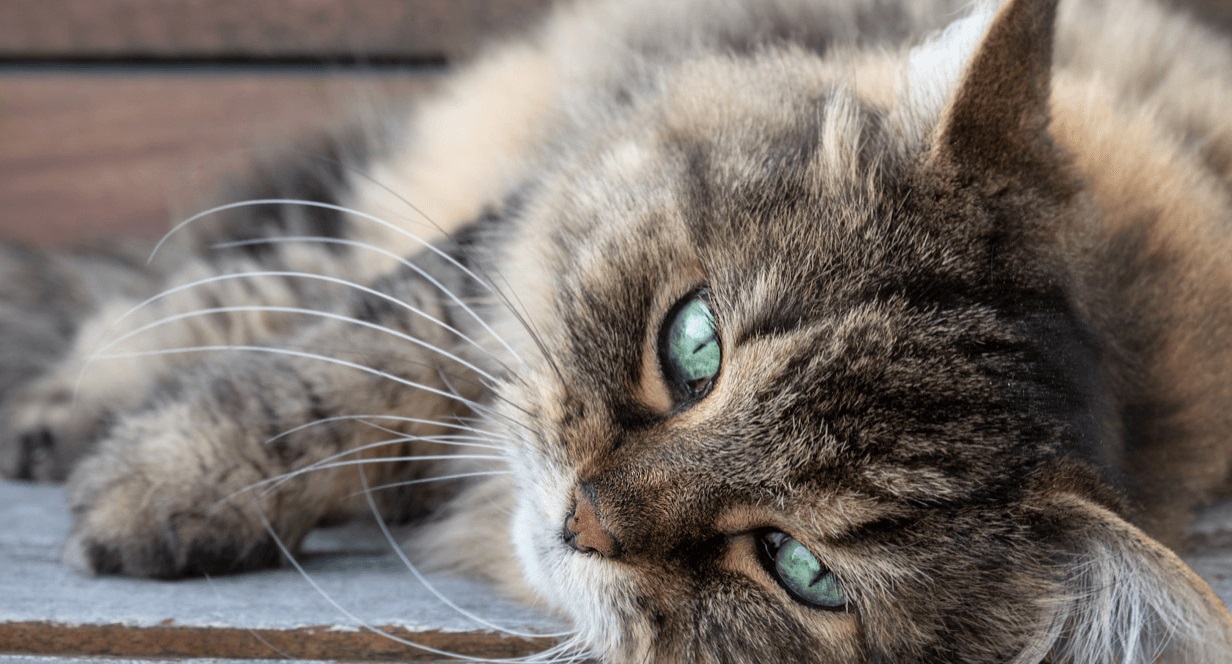
Does your cat make a noise when you walk into the room? Chances are, that noise is their way of saying, "Hello! I'm happy to see you." Sometimes, this noise is reserved just for you (their favorite human). Other times, your cat may meow at every member of the family.
Requesting Food
Does your kitten or cat sit next to their food bowl and meow repeatedly? Chances are, they're saying, "I'm hungry. Give me something to eat."
If they don't get what they want, their meows might get more persistent and demanding (or they'll slink off and shred your favorite pair of shoes).
Seeking Attention
If your cat wants cuddles or a place in your lap, they’ll often use a specific meow to get your attention and make that happen. This is especially true for cats who are alone during the day. They may be extra vocal when you get home because they want some time with you!
Asking for Access
If your cat meows at a closed door, it usually means they want you to open that door so they can see what's on the other side.
Expressing Discomfort or Displeasure
When your cat is unhappy about something (a dirty litter box, an empty water bowl, or a change in their daily routine), they may tell you about it with a unique meow.
If you pay close attention to the context of these sounds, you can give your cat what they need to be happy. To help even more, let’s take a look at some other cat sounds and what they might mean.
Types of Cat Sounds and What They Mean
Table of Contents
Beyond the standard meow, cats exhibit an extensive variety of sounds that help them communicate with the humans that are closest to them.
By listening to these sounds and watching their ears and tail while they speak, you can understand what they want and need.
Sound | What It Sounds Like | What It Usually Means |
Meow | Classic "meow" in varying lengths and pitches | General communication: greeting, request, demand, or complaint depending on tone |
Chirp/Trill | Short, rolling "brrp" or bird-like sound | Friendly greeting, excitement, or invitation to follow (often toward the food bowl) |
Purr | Low, continuous rumbling | Usually contentment, though cats may also purr when anxious or unwell |
Chatter | Rapid teeth-clicking or jaw movement | Excitement or frustration when watching birds or prey through a window |
Yowl/Howl | Long, drawn-out, moaning sound | Distress, discomfort, territorial warning, or mating behavior in unaltered cats |
Hiss | Sharp, snake-like burst of air | Fear, feeling threatened, or warning to back off |
Growl | Low, rumbling, sustained sound | Anger, annoyance, or warning; best to give your cat space |
Why Do Cats Yowl?
A yowl is a long, drawn-out, often intense sound that you may perceive as a distress signal. While that’s often the case, your cat may also yowl to warn off intruders, seek a mate, or simply shout for help when they feel stuck or disoriented.
If your senior cat begins yowling more frequently, it could indicate age-related confusion or a change in their vision or hearing. Consult your veterinarian as soon as possible.
Why Some Cats Meow More Than Others
Just as people have different personalities, some cat breeds are naturally more talkative than others. Siamese, Burmese, and Oriental Shorthairs, for example, are famous (or infamous) for their chattiness, while Persians, Russian Blues, and Chartreux tend to be much less vocal.
Each cat has its own unique personality, so even within quiet breeds, one cat may naturally be more talkative than another.
When Excessive Meowing May Signal a Problem
A sudden increase in meowing, especially if it’s out of character or it morphs into a yowl, can be your cat’s way of signaling stress or physical discomfort.
As we mentioned earlier, with older cats, frequent vocalizing (both meows and yowls) can be a sign of age-related confusion or changes in their hearing and vision. If your cat’s chatter comes with a change in appetite or litter box habits, consult your veterinarian to see if anything’s wrong.
It’s also worth noting that unaltered cats (especially females in heat) may meow or yowl loudly as part of their mating behavior. Getting them spayed or neutered typically reduces this behavior.
How to Respond to Your Cat's Meowing
For Attention-Seeking Meows
To manage a chatty cat that’s seeking your attention, try waiting until they’ve settled down (finished meowing and are now quiet) before offering rewards or affection.
If these attention-seeking meows occur while you’re trying to sleep, engage your cat in daytime play, and double-check that their food, water, and litter box are up to your cat's standards before you go to bed.
For Food-Related Meows
To prevent demanding behavior, avoid filling the bowl every time they cry out. If they seem extra hungry, try using a handy timed feeder. Maintaining a consistent feeding schedule is one of the best things you can do to help your cat know exactly when to expect their next meal.
For Distress or Discomfort
If your cat’s meowing sounds unusual or changes dramatically all of a sudden, first check that their litter box is clean and that they have fresh water.
If everything is fine in that regard, they might be in pain. If you can’t identify the cause, it’s always best to schedule a visit with your veterinarian.
Support Your Cat's Communication with Quality Nutrition from IAMS™
A well-nourished cat is a happy cat! And, when they feel their best, they can express themselves clearly through cheerful greetings and contented purrs. That’s where IAMS™ cat food comes in.
All of IAMS™ recipes are expertly formulated with high-quality protein and essential nutrients to support your cat’s overall energy and vitality.
Explore the full range of IAMS™ cat food options online to find the perfect nutrition for your four-legged friend!
Contributor
Dena Bley is a registered veterinary technician with 25 years of experience and Sr. Expert Advice Team member. She began her career as a researcher at P&G before joining the Pet Health and Wellness Team at Mars 2014. With deep roots in Ohio, Dena brings over a decade of research experience and a passion for animal care, complemented by her hands-on work with a variety of animals on her family’s small farm.
References
- https://www.aspca.org/pet-care/cat-care/common-cat-behavior-issues/meowing-and-yowling
- https://www.humanesociety.org/resources/understanding-feline-language
- https://icatcare.org/articles/cat-communication
- https://www.aaha.org/resources/2021-aaha-aafp-feline-life-stage-guidelines/
- https://www.maddiesfund.org/feline-communication-how-to-speak-cat.htm
- https://www.animalhumanesociety.org/resource/how-read-your-cats-body-language
- https://pmc.ncbi.nlm.nih.gov/articles/PMC7341261/
- https://journals.sagepub.com/doi/pdf/10.1177/1098612x13477537


