
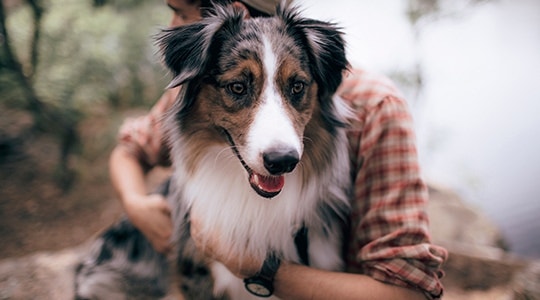


Though we may think of dogs as our happy-go-lucky companions, they can experience stress for many different reasons, just like us. Fortunately, there are ways we can recognize their anxiety and help relieve and manage it moving forward. In this guide, we understand the root of the problem: the stressors themselves, then learn about the signs of stress in dogs and how to calm a stressed dog.
Key Takeaways
- The four most common causes of stress in dogs are fear, separation, aging, and changes in their routine or environment.
- Signs of stress in dogs range from physical cues like pacing and shedding to vocal signals like whining and howling.
- Removing your dog from the stressor and providing a quiet space is always the first step toward relief.
- A consistent daily routine, regular exercise, and a complete and balanced diet all support a calmer, healthier dog.
- If signs of stress in dogs persist, consult your veterinarian to rule out underlying conditions and explore treatment options.
Common Causes of Stress in Dogs
Understanding what's triggering your dog's anxiety is the first step to helping them feel better. The four most common causes are:
- Fear: Loud noises, unfamiliar people, new environments, or certain objects can all set off fear-based anxiety.
- Separation: Separation anxiety affects nearly 15% of dogs and is triggered by time away from their family, even briefly.
- Aging: Older dogs can experience cognitive decline, and the resulting confusion often presents anxious behavior.
- Change: A new home, a shift in routine, or even changes in your own stress levels can unsettle your dog.
Keep in mind that some dogs are naturally more stress-prone than others. In fact, dogs that are highly intelligent can become bored easily and that could contribute to stress as well. Knowing your dog's temperament helps you anticipate and prevent what might worry them.
Signs of Stress in Dogs
Knowing how to read dog signals or dog body language is one of the most valuable skills you can develop as a pet parent. The key here is to understand what their normal is so you can clearly identify any deviations away from that. Here are some signs of stress in dogs to look out for:
Pacing/Shaking
Restless movement or trembling is one of the most visible signs that your dog is feeling overwhelmed. It often signals that they're trying to physically release built-up tension, much like how we pace when we're anxious.
Whining/Barking
Repetitive whining or out-of-place barking frequently means your dog is uncomfortable or seeking reassurance from you. Pay attention to when and where these vocalizations occur.
Tail and Back Position
A tucked tail or a cowering lowered back are clear signals that your dog feels threatened or unsafe. You may also notice a "C-shaped" body posture, where your dog curves their spine into a defensive arc; a telling sign they're trying to make themselves appear small and secure. These postural cues are some of the most reliable indicators of canine stress.
Yawning/Licking
While these can be ordinary behaviors in the right context; in a stressful situation they’re often “calming signals”, especially a lip lick where the tongue flicks up to/over the nose. It could be your dog’s way of self-soothing and communicating discomfort to those around them.
Changes in Eyes and Ears
Dilated pupils, rapid blinking, or wide “whale eye” paired with flattened or pinned-back ears are telling stress indicators. If your dog’s gaze looks different than usual or you notice extra tension within the face, it’s worth paying attention.
Panting
Panting without physical exertion or heat exposure is a common stress response, signaling that your dog's nervous system is working overtime. It's easy to miss, but important to note.
Howling
Sustained or mournful howling, particularly when left alone, is often directly linked to separation anxiety. If your neighbors mention it while you're out, that's a meaningful clue.
Avoidance/Displacement Behavior
If your dog suddenly turns away, hides behind furniture, or starts sniffing the ground during an interaction, they may be trying to remove themselves from a stressor. This subtle behavior is easy to overlook but worth noting. If possible, you should assist in removing them from the situation.
Shedding
Stress can trigger sudden, excessive shedding even outside of normal seasonal cycles. If you notice significantly more fur during or after a stressful event, it could be more than a coincidence.
Some of these signs mimic everyday dog behaviors. That’s why, when observing your dog’s body language, watch the whole dog and not zero in on one or two locations on their body. Always consider context and track your dog's baseline so you can recognize when something is genuinely off.
How to Calm a Stressed Dog?
When you spot the signs of stress in your dog, your first move is simple: calmly remove them from whatever is causing the anxiety. From there, a few consistent habits will make a real difference over time:
- Create a safe space: Set up a quiet, comfortable retreat, a cozy crate or a corner with their bed, where your dog can decompress without pressure.
- Stay calm yourself: Dogs are highly attuned to your emotional state. Your calm, steady presence is genuinely reassuring to an anxious dog.
- Exercise regularly: Physical activity before potentially stressful events improves your dog's mood and builds resilience over time. Even a brisk walk can help.
- Keep a consistent routine: Predictable daily schedules give anxious dogs a sense of security and control.
- Reward calm behavior: When your dog is relaxed, reinforce it with a gentle pet or a favorite treat; you're teaching them that calm is always the right choice.
- Support them with balanced nutrition: A well-nourished dog is better equipped to handle everyday stressors. Feeding a complete and balanced dog food gives your dog the essential nutrients they need to stay healthy, happy, and resilient. Explore IAMS™ dog food to find their new favorite.
- Take care of yourself: Your stress can become your dog's stress. Keeping your own emotional health in check is genuinely good for both of you.
If anxiety continues despite your best efforts, your veterinarian can recommend anti-anxiety support, identify any underlying health conditions that may be contributing, or connect you with a certified trainer or behaviorist for behavior modification.
Conclusion
Stress is a natural part of life, for dogs as much as for us. The good news is that with a watchful eye, a calm routine, proper nutrition, and a little patience, you can make a meaningful difference in your dog's overall well-being.
Explore More
Diarrhea in dogs what you need to know | Feeding tips for your teething puppy | Keeping your puppy healthy | Leash training puppy | How much exercise does my dog need | How teach your dog stop barking | Dog Food For Small dog | Dog food for medium dog | Dog food for large dog | Wet Dog Food | Dry Dog Food
Contributor
Jessa is an experienced animal trainer and behavior specialist with over 20 years working and learning with animals. Her background includes work with marine mammals (sea lions, seals, otters, dolphins, walruses) as well as cats an dogs. Throughout her career she has focused on cooperative care behaviors like voluntary blood draw and veterinary handling. She has Masters of Science in International Animal Welfare, Ethics and Law as well as a Human Animal Bond Certification. Along with her family cats and dogs, Jessa is a volunteer puppy raiser for Canine Companions, helping to train future service dogs.
Table of Contents
Frequently Asked Questions
YOU MAY ALSO LIKE …

Why Do Dogs Sleep So Much? We Take an A to Zzz Look at the Issue
We asked dog owners* how many hours a day they think their adult dog sleeps. The answers averaged around 9.7 hours. Truth is, dogs normally sleep around 12-14 hours a day.
READ MORE
Small-Breed Puppy Feeding Secrets
Get tips on feeding small-breed puppies and how to choose the best food.
READ MORE
Puppy Basics Nutrition for Medium Breeds
Your puppy is changing in so many ways. In fact, the most rapid growth will take place in these first months of his life. His immune system is developing. Bones are growing...
READ MORE
Do Dogs Like Hugs?
Most humans recognize a hug as a sign of affection and friendship. In an IAMS™ survey*, 83% of dog parents say their dog likes hugs too. But how do dogs feel about them? Bring it in! We’re going to try and get our arms around this question.
READ MORE