

How to Care for Your Kitten: The First 6 Months
Bringing home a new kitten is really exciting, but it can also be a little nerve-wracking! Kittens require the right food, a safe environment, plenty of play time, gentle socialization, and solid routines to set them up to become confident and healthy adults.
Simple daily habits, such as setting up a quiet, safe space and creating a predictable meal schedule, make a big difference in how your kitten settles into their new home.
We’ve created this guide to help you bond with your kitten and provide them with everything they need to thrive.
Key Takeaways
- Kittens need a safe, quiet home base with food, water, a clean litter box, toys, and cozy resting places.
- Create and maintain a predictable daily schedule for feeding, play, and sleep to help your kitten grow and thrive.
- Feed your kitten a complete and balanced diet and always provide fresh water.
- Regularly brush your kitten’s coat, trim their nails, bathe them, and check their eyes, ears, and teeth.
- Bring your kitten to the veterinarian early for a wellness check, vaccine schedule, parasite prevention, and plans for spaying or neutering.
- Kittens need daily climbing opportunities, scratching surfaces, and gentle social interactions to both build confidence and reduce boredom.
Setting Up Your Home for a New Kitten

Essential Supplies to Have Ready
Before your kitten comes home, it’s a good idea to have kitten-formulated food, food and water bowls, a litter box, and litter on hand. If it’s possible, choose the same food and litter they had at the shelter or breeder, at least initially.
Have a mix of toys, scratching posts, and other enrichment items ready and waiting for your kitten, too.
And don’t forget a secure carrier for vet visits and transportation, like that first ride home!
Creating a Safe, Comfortable Space
Choose a quiet room, like the bathroom or spare room, for the first few days so your kitten can adjust to their new home gradually.
As your kitten’s fear gets replaced by curiosity and confidence, you can introduce more areas of your house. Just remember to remove possible risks such as small objects, wires, and toxic plants.
Additionally, make sure your kitten has a cozy bed, soft blankets, and access to favorite hiding spots.
Feeding and Nutrition Basics
Choosing the Right Kitten Food
When considering what food to feed your kitten, choose a complete and balanced kitten food formula. It’s also important to feed them at the same time every day to establish a routine, which will help them feel secure and calm.
If you plan to switch to a kitten food they’re not familiar with, transition gradually so they don’t get an upset stomach.
Feeding Routine and Water Access
Follow the feeding guidelines on your kitten's food packaging and then adjust portions based on your veterinarian’s recommendation. You also want to provide your kitten with fresh water at all times.
Litter Training Your Kitten
Setting Up the Litter Box
When setting up your kitten’s litter box, choose a shallow box so they can easily get in and out. Use unscented, clumping litter for the most efficient cleaning, and put the litter box in a quiet, low-traffic area, so they’ll feel comfortable using it.
Encouraging Good Litter Habits
You can help your kitten adopt good litter habits by doing a good job with your part of the process! In the early days, make a habit of bringing your kitten to the litter box after meals and naps. Keep the box in one place, scoop the litter daily, and refresh it regularly.
Troubleshooting Litter Box Issues
If your kitten has trouble using the litter box or avoids it altogether, make sure:
- The area is calm, free from loud noises, and private
- You add one box per floor if your house has multiple levels
- You’ve got one litter box per cat in your house
If your kitten has a good routine but then you notice changes to their litter habits, contact your veterinarian to see what the problem might be.
Table of Contents
Grooming and Hygiene for Kittens
Brushing and Coat Care
It’s important to brush your kitten’s coat regularly to reduce shedding and get them comfortable with grooming. Try to keep the sessions short and sweet to help your kitten establish a relaxed relationship with it.
Nail Care
Scratching posts are a great way to give your kitten independence with the natural scratching behaviors that help maintain their nails. But you also want to introduce nail trims early, so the process becomes familiar to them.
Bathing Your Kitten
As the story goes, cats aren’t supposed to like baths. The good news is that your kitten doesn’t routinely need them. Only if they get exceptionally dirty or into something sticky.
Use a cat-safe, mild shampoo with warm water. Avoid your kitten’s face and ears (use a damp cloth for those more sensitive areas) and make the bath quick and gentle. Then dry your little bundle of fluff with a soft towel in a warm, draft-free space.
If you notice your kitten has a lingering odor or skin irritation, or if they make repeated messes that require bathing, you may want to contact your veterinarian.
Basic Hygiene Checks
Gently wipe around your kitten’s eyes and nose if they need clearing, and check their eyes, ears, and teeth regularly for changes. Ask your veterinarian about dental care, too.
Health Care and Veterinary Visits
Scheduling Early Vet Appointments
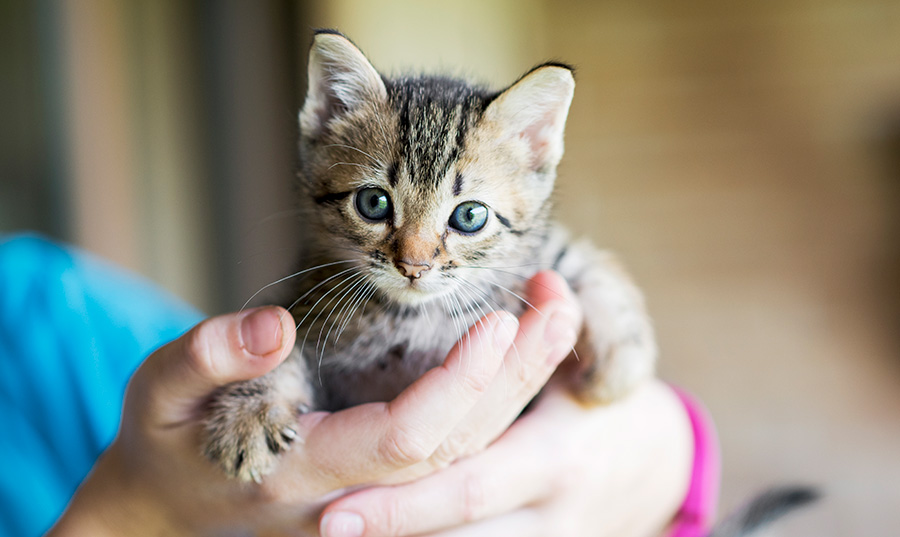
Bring your kitten to the veterinarian early for a wellness check, where they can help you make sure your kitten is in good health and guide you on a vaccine schedule, parasite prevention, and plans for spaying or neutering.
Watching for Early Signs of Illness
Watch for changes in your kitten’s appetite, energy, litter box habits, and weight, and contact your veterinarian if they seem lethargic, congested, or have GI upset.
Kitten Developmental Milestones
Age | Milestone |
7-10 days old | Kittens begin to urinate and defecate on their own |
10-18 days old | Kittens attempt to stand Kittens double their birth weight at about day 14 Kittens’ eyes and ears begin to open
|
18-21 days old | Kittens hear and respond to noises Kittens begin to walk |
3 weeks old | Take orphaned kittens to the veterinarian for deworming Kittens begin responsive vocalization Deciduous (baby) teeth will begin erupting |
4 weeks old | Begin weaning process for orphaned kittens |
6-8 weeks old | Begin weaning process for mother-fed kittens Socialization becomes increasingly important |
3-6 months old | Kittens’ adult teeth erupt |
Socialization and Play
Encouraging Healthy Social Behavior
The best way to help your kitten develop healthy social behaviors is to let them explore at their own pace. You can nurture these behaviors by supporting their gradual comfort with new people, new places, and new things.
Providing Daily Play
Short daily play sessions with lasers, tunnels, wand toys, and other soft toys help your kitten burn physical and mental energy, keeping them mentally and physically engaged and reducing unwanted behaviors that often pop up with boredom.
Building Confidence Through Enrichment
Set up physical and mental enrichment activities for your kitten with climbing spaces, hiding spots, and puzzle feeders. Reinforce their curiosity and willingness to try with gentle praise and rewards.
Safe Handling and Everyday Care

Picking Up and Holding Your Kitten
Pick up your kitten in a way that makes them feel safe and secure by supporting their hindquarters and chest. Always avoid lifting them by their limbs or scruff.
Kitten-Proofing Your Home
Just like you need to baby-proof your home, you need to kitten-proof it, too!
Keep your kitten safe by securing cords, blinds, and items on shelves that your kitten could reach by climbing. And remember to keep small objects, medications, cleaners, and toxic plants where your kitten can’t get to them.
Lastly, be aware of areas where your kitten can get trapped, like in V-shaped table legs.
Common Mistakes to Avoid
Caring for a kitten can be overwhelming, but by giving them lots of love and helping them feel safe and happy, you’re doing great! As you learn to take care of your newest family member, try to avoid these common mistakes:
- Switching foods quickly, without a gradual transition
- Forgetting litter box cleaning and routine hygiene
- Overfeeding treats or giving your kitten too much human food
- Skipping early veterinary visits
- Pushing your kitten to interact before they’re ready
How to Wean Kittens With IAMS™ Cat Food

Kittens grow so fast! At around four weeks old, you can begin offering your kitten water in a shallow dish alongside their mother's milk. You can also start introducing canned kitten food or softened dry kitten kibble at this stage, but nursing should continue alongside these new foods.
Then it’s food time! Mix IAMS™ Perfect Portions™ Kitten Pate with water to create a soft, easy-to-eat texture, and slowly increase the amount of food while reducing the water until your kitten is happily eating 100% soft food.
Transition to dry food in the same gradual way. Add small portions of IAMS™PROACTIVE HEALTH ™ Healthy Kitten to the soft mixture, and slowly increase the dry food as your kitten gets used to it.
In three weeks, your kitten should be fully weaned and ready for their next milestone!
Contributor
Jessica Gilliam is a veterinarian with more than 14 years of clinical experience, specializing in small animal medicine. She is passionate about surgery, dentistry, mentorship, and education. Jessica serves as the Community Chair for the Tennessee Market at Banfield and oversees Mars Petcare’s PetConnect chat, which offers free educational support for pet parents. In her free time, she enjoys hiking and baking.
References
- https://www.vet.cornell.edu/departments-centers-and-institutes/cornell-feline-health-center/health-information/feline-health-topics/choosing-and-caring-your-new-cat
- https://www.aspca.org/pet-care/cat-care/general-cat-care
- https://vcahospitals.com/know-your-pet/bringing-home-your-new-kitten
- https://www.animalhumanesociety.org/resource/kitten-101-what-know-new-cat-parent
- https://www.animalhumanesociety.org/resource/caring-young-kittens-and-their-moms
- https://humanesocietyofcharlotte.org/services/community-cats-services/findingkittens/caring-for-kittens-5-weeks-and-older/


