
Obese Cat: How to Keep Your Cat at a Healthy Weight
Your cat is adorably chubby! No harm in that, right? Unfortunately, obesity is one of the most common health problems for cats today. Carrying excess weight strains their bodies and may lead to conditions like arthritis or heart disease.
If your cat weighs more than 20% over their ideal body weight, they’re considered obese. But don’t worry! In this article, we’ll explain how to tell if your cat is obese and suggest ways to help them lose weight safely so they can live an active, happy life.
Key Takeaways
- A cat is obese when it weighs more than 20% over its ideal body weight; overweight is 10-20% above ideal.
- To check if your cat is overweight or obese, use a 9-point Body Condition Score (BCS) chart by feeling ribs, checking for a visible waist, and looking for an abdominal tuck.
- Obesity in cats increases the risk of diabetes, arthritis, heart disease, and breathing problems, as well as shortens their lifespan.
- To lose weight safely cats should lose 0.5% to 2% of body weight per week.
- Key strategies for weight loss include veterinary guidance, portion control, scheduled meals, increased activity, and weight management food.
What Is an Obese Cat?
Table of Contents
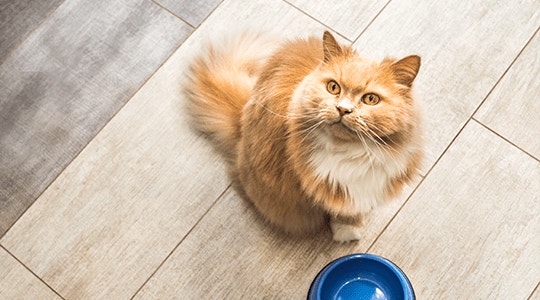
Do you have an “extra fluffy” feline? About 10% of cats are considered overweight today. Of those overweight cats, 40% of them are actually “obese,” meaning they weigh over 20% above their ideal body weight.
Packing on too many pounds is pretty common for older cats, indoor cats, and those who’ve been neutered or spayed.
Although a chunky cat is pretty cute, it’s not healthy for them to carry all that excess weight. It can shorten their lifespan and increase the risk of preventable diseases.
Overweight vs. Obese: What Is the Difference?
If you’re wondering if you have an overweight or obese cat on your hands, the distinction is simple. Overweight cats weigh 10-20% above their ideal weight, whereas obese cats weigh more than 20% above their ideal weight.
The chart below gives you an idea of how to tell the difference. (Note: These are general guidelines. Your veterinarian can provide the most accurate assessment of your cat's body condition and ideal weight.)
Weight Status | Definition | BCS | What To Look For |
Ideal | At target weight | 4 to 5 | Ribs may be visible and felt |
Overweight | 10-20% above ideal | 6 to 7 | Ribs less visible (under layer of fat); rounding of abdomen |
Obese | More than 20% above ideal | 8 to 9 | Ribs cannot be felt under layer of fat; abdomen in distension |
How to Tell if Your Cat Is Overweight or Obese: Body Condition Score
Veterinarians use a nine-point body condition score (BCS) to determine whether a cat is too thin, just right, overweight, or obese.
This evaluation is done both as a hands-on exercise and through observation. Steps include checking the cat’s waistline, feeling for their ribs, and checking for what’s called an abdominal tuck.
If you want to get an idea of how your cat will fare, you can try it yourself. Here’s how:
- Check your cat’s waist: Stand above your cat and look down. If they have an “hourglass shape,” or a slight indent behind the ribs, their body shape is healthy. However, if the sides are straight or bulge, it’s likely they’re overweight. If they appear rounded, they’re probably obese.
- Feel your cat’s ribs: Place your hands on both sides of your cat’s rib cage with your palms facing down. If your cat is at an ideal weight, you’ll be able to feel their ribs easily with light pressure. However, if you need to exert more pressure to find their ribs, it’s a good bet they’re overweight. And, if you can’t feel their ribs at all, your little fluffball might be obese.
- Look for an abdominal tuck: When observing your cat from the side, their belly should slope upward toward their back legs. If their belly is rounded or saggy, they have too much body fat.
These are the criteria your vet will use to establish your cat’s BCS. A BCS of four or five means your cat is at their ideal weight. One to three means your cat is too thin, six to seven means they’re overweight, and eight to nine means they’re obese.
Go to IAMS™ Healthy Weight Hub for Cats for helpful information on maintaining your cat’s ideal weight. Start by using the Weight Assessment Tool for personalized recommendations.
Health Risks of Obesity in Cats
Studies show that obese cats don’t live as long as leaner cats, and older cats between eight and 12 years old have a threefold higher risk of death than those at a healthy weight.
Overweight and obese cats are also more prone to various diseases and conditions such as diabetes mellitus, arthritis and joint pain, heart disease, cancer, liver disease, and urinary tract issues.
How to Help Your Cat Lose Weight Safely
If your cat needs to lose weight, it’s important they do it safely. Here are some tips.
Schedule a Veterinary Checkup
Before starting any weight loss plan, consult your veterinarian. They’ll do a physical exam to confirm there’s no medical reason your cat has gained weight.
If it’s just too much kibble, your vet can recommend a safe daily calorie intake. Once you have a plan, take it slow. Losing weight too fast puts your cat at risk of a serious liver condition called hepatic lipidosis.
Practice Portion Control
Follow the feeding guidelines for your cat’s target weight and put a stop to high-calorie treats. You could also switch your cat’s food to a weight management formula.
Establish a Feeding Schedule
Instead of letting your cat graze, schedule their feedings. This will regulate their appetite and prevent snack attacks. At mealtime, put their food down for 20 to 30 minutes, and then remove the bowls.
Increase Activity and Play
Aim for at least two to three daily play sessions of 10 to 15 minutes each, where you’re using feather wands, laser pointers, or other toys that mimic prey.
Track Progress
Keeping a journal of your cat’s weight loss can help you see important trends to share with your veterinarian. The goal is for your kitty to lose 0.5-2% of their body weight per week. With consistent effort, most cats reach their target weight within six to 13 months.
Note: If your cat stops eating for more than 24 to 48 hours during a weight loss program, contact your veterinarian immediately. Prolonged fasting in overweight cats can trigger hepatic lipidosis.
Support Your Cat's Weight Goals with IAMS™

If your cat is obese, don’t fret. There’s something you can do to help! Create a weight loss plan with your veterinarian. A combination of portion control, extra exercise, scheduled feedings, and a high-quality weight management food can help.
IAMS™ PROACTIVE HEALTH™ Healthy Weight cat food is formulated to help cats lose weight and stay satisfied. It’s complete and balanced, featuring a high-quality protein as its first ingredient, as well as L-carnitine to help burn fat and maintain a healthy metabolism.
Feed your cat IAMS™ Cat Food to help them get back to their ideal weight so they can live a healthy, active life!
Contributor
Jessica Gilliam is a veterinarian with more than 14 years of clinical experience, specializing in small animal medicine. She is passionate about surgery, dentistry, mentorship, and education. Jessica serves as the Community Chair for the Tennessee Market at Banfield and oversees Mars Petcare’s PetConnect chat, which offers free educational support for pet parents. In her free time, she enjoys hiking and baking.
References
- https://vcahospitals.com/know-your-pet/body-condition-score-in-cats
- https://www.petobesityprevention.org/weight-loss-cats
- https://www.vet.cornell.edu/departments-centers-and-institutes/cornell-feline-health-center/health-information/feline-health-topics/obesity
- https://vcahospitals.com/know-your-pet/obesity-in-cats
- https://pmc.ncbi.nlm.nih.gov/articles/PMC7337193/
- https://vcahospitals.com/know-your-pet/exercising-your-cat-for-weight-loss
- https://vcahospitals.com/know-your-pet/liver-disease-fatty-liver-syndrome-in-cats
- https://www.avma.org/resources-tools/pet-owners/petcare/your-pets-healthy-weight
- https://www.petobesityprevention.org/catbcs